21 August 2026
If you are wondering how long does BIAB last, most clients should expect approximately two to three weeks before an infill, refresh or professional removal. Some BIAB manicures can remain intact for longer, but nail growth, product choice, application, lifestyle and aftercare all affect the result.
A manicure remaining attached for four weeks does not necessarily mean it should always be left that long. As your natural nail grows, the position and balance of the structured overlay change. Regular maintenance helps keep the nails looking fresh and allows your technician to check for lifting, cracks or other problems.
Here is what determines BIAB longevity, when to book your next appointment and how to avoid shortening the life of your manicure.
How long does BIAB last?
BIAB typically lasts two to three weeks before it needs professional attention.
The GelBottle, the company behind the BIAB name, states that some BIAB products can provide longer wear, with maintenance intervals varying between approximately two and four weeks. Individual formulas also have different performance claims.
Those longer figures should not be interpreted as a guarantee. At Therapy Hair Body & Nails, we give a realistic general expectation of two to three weeks because the correct interval depends on your own nails and how they are used every day.
Your manicure may need attention sooner if:
-
Your nails grow quickly
-
You regularly work with water or cleaning products
-
Your job is physically demanding
-
The nails are longer than your lifestyle comfortably supports
-
You pick or bite around the product
-
A corner or edge begins to lift
-
Your natural nails are particularly flexible or oily
-
You have recently changed product systems
Someone with slower-growing nails, a practical length and consistent aftercare may achieve longer wear. Your first appointment provides useful information about how BIAB performs on you.
What is BIAB?
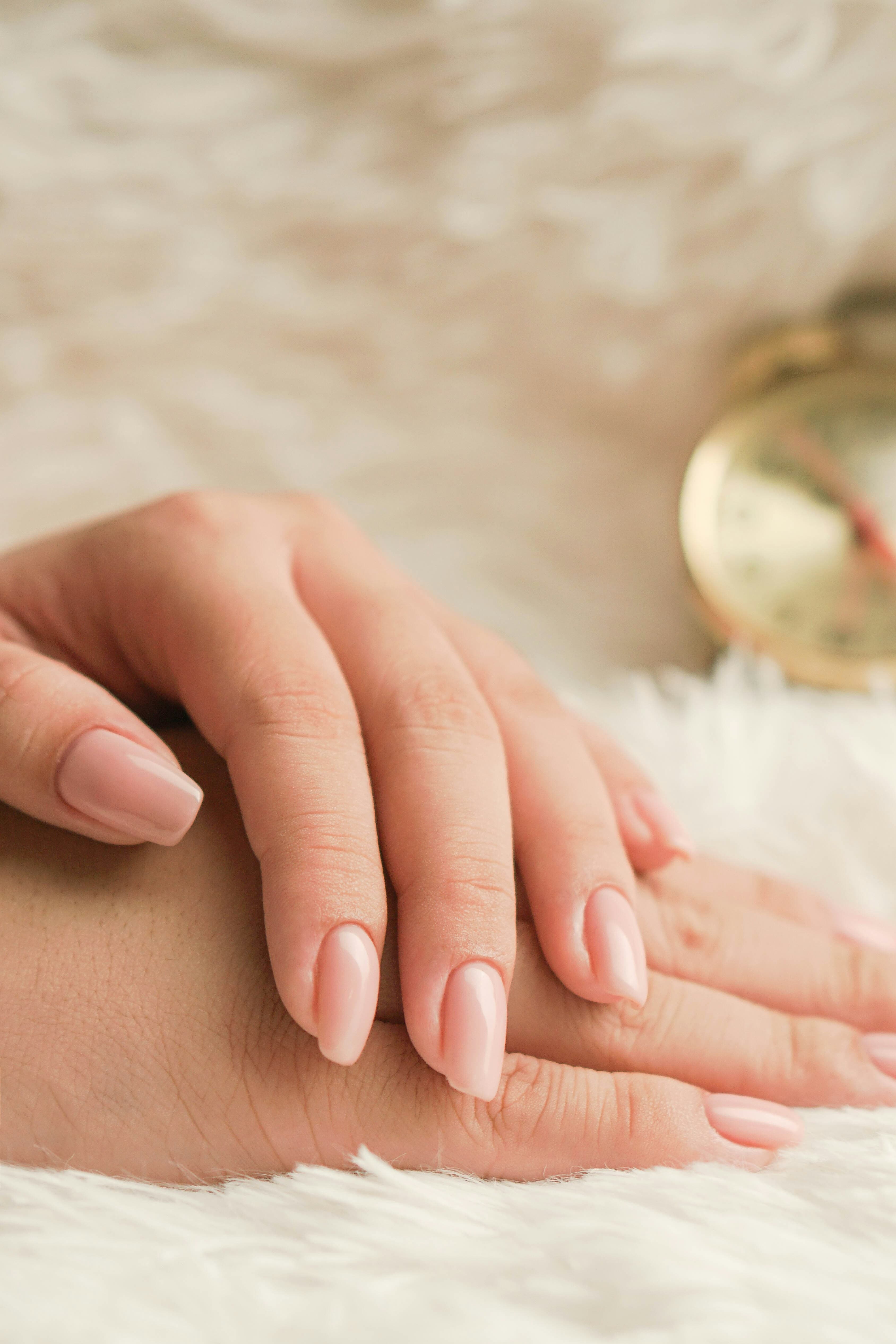
BIAB stands for Builder In A Bottle. It is a builder-gel system used to create a structured overlay over the natural nail.
Unlike gel polish, which mainly provides colour and shine, BIAB adds strength and structure. It can be worn in a natural shade, finished with gel colour or combined with nail art.
BIAB is commonly chosen by clients who:
-
Want to grow their natural nails
-
Need more support than gel polish provides
-
Prefer a natural-looking overlay
-
Experience frequent chipping with ordinary gel
-
Want strength without a heavy-looking finish
-
Need minor shape or structure corrections
BIAB can also be used with tips to create additional length, although longer nails introduce different maintenance considerations.
Therapy specialises in BIAB nails in Canterbury, including natural overlays, gel finishes, tips and bespoke art.
Why does BIAB longevity vary?
There is no responsible way to promise that every BIAB manicure will last an exact number of days.
Several factors work together.
Natural nail growth
BIAB does not stop the natural nail from growing. As growth appears near the cuticle, the manicure gradually looks less fresh.
The structured area created by the technician also moves forwards with the growing nail. This changes the balance of the overlay, especially on longer nails.
Two clients can receive identical treatments and need maintenance at different times because their nails grow at different rates.
Natural nail type
Some nails are harder, softer, more flexible or naturally oilier than others. These characteristics can affect product adhesion and how the overlay responds to everyday pressure.
The GelBottle notes that soft or oily nails and individual nail chemistry can affect how long some BIAB formulas last.
This does not mean there is something wrong with your nails. It may mean that your technician needs to adjust preparation, product selection, nail length or maintenance timing.
Preparation
Good preparation helps the product adhere to the natural nail.
Professional preparation may include:
-
Assessing the nail
-
Shaping the free edge
-
Carefully preparing the cuticle area
-
Removing surface oils and contaminants
-
Selecting the appropriate base or BIAB system
-
Keeping the product away from surrounding skin
Preparation should be thorough without being unnecessarily aggressive. Excessive filing can thin or damage the natural nail.
Application and structure
BIAB is not simply painted on like ordinary varnish. The technician creates a balanced structure suited to the nail’s length and shape.
If the overlay is too thin in an area that receives pressure, it may crack. If it is bulky or poorly balanced, it may feel uncomfortable or place unnecessary stress on the natural nail.
The correct structure becomes increasingly important as the nails grow longer.
Nail length and shape
Long nails create more leverage when they strike a surface or are used to grip an object. A length that looks attractive but does not suit your daily routine may lift or break sooner.
Certain shapes also expose corners or edges to more wear. Your technician can help adapt your preferred style to make it more practical.
Daily activities
BIAB is durable, but it is not indestructible.
Activities that may shorten wear include:
-
Regular cleaning without gloves
-
Repeated soaking in water
-
Gardening
-
Opening cans with the nails
-
Scraping labels or surfaces
-
Picking at packaging
-
Typing with the nail tips
-
Contact sports
-
Biting or picking
-
Using strong chemicals without protection
The manicure may survive one accidental knock, but repeated pressure can weaken an edge or create lifting.
How do you know when BIAB needs an infill?
Book maintenance when visible growth becomes significant or according to the interval recommended by your technician, generally around two to three weeks.
Signs that attention is due include:
-
A noticeable gap near the cuticle
-
The structure has moved forwards with nail growth
-
Small areas of lifting
-
A crack or chipped edge
-
The length has become impractical
-
The nails feel unbalanced
-
Colour or nail art has visibly grown out
-
One nail feels different from the others
Do not wait for several nails to break before arranging an appointment. Early maintenance is generally easier than repairing a neglected or heavily lifted set.
What is a BIAB infill?
An infill maintains the existing BIAB as the natural nail grows.
The technician will assess the product and natural nail, reduce or remove unsuitable areas, prepare the regrowth and rebuild the structure where needed. The exact process depends on the product system and condition of the manicure.
An infill is not simply filling the gap with more gel. The nail must remain balanced as it grows.
Some situations may require complete removal rather than an infill, including:
-
Significant lifting
-
Product breakdown
-
A change of system
-
Damage that needs closer assessment
-
A very overgrown manicure
-
A suspected reaction
-
The technician deciding removal is safer or more appropriate
The GelBottle confirms that certain BIAB formulas are suitable for infilling, but the technician must still assess whether an infill is appropriate for the individual set.
How many BIAB infills can you have?
There is no useful universal number of infills that applies to every client.
The decision depends on:
-
The condition of the remaining product
-
The condition of the natural nail
-
Lifting or damage
-
The product system used
-
Whether the structure can be safely rebalanced
-
The technician’s professional assessment
-
Whether you want to change treatments
A complete removal should not be performed more frequently than necessary merely to start again, but old or compromised product should not be repeatedly covered.
Your technician should explain what is being retained, what is being removed and why.
Can BIAB last four weeks?
It can for some clients, but four weeks should not automatically become the target.
Some BIAB formulas are designed to offer wear of up to four weeks or longer under suitable conditions. However, “still attached” and “appropriately maintained” are not always the same thing.
By four weeks, you may have:
-
Significant visible regrowth
-
A changed stress point
-
More leverage from additional length
-
Hidden lifting near an edge
-
An increased chance of accidental impact
-
A manicure that no longer looks balanced
Clients with short nails and slow growth may be comfortable at the longer end of the maintenance window. Clients with fast growth, longer nails or demanding work may need appointments sooner.
Follow the schedule recommended after your technician has seen how the product performs on your nails.
Why is my BIAB lifting after one week?
Early lifting can have several possible causes. It does not always mean the product itself is poor.
Potential reasons include:
-
Product touching the surrounding skin
-
Incomplete preparation
-
Natural oils or moisture affecting adhesion
-
A product system unsuitable for your nail type
-
Incorrect curing
-
Repeated water or chemical exposure
-
Picking at an edge
-
Impact to the nail
-
Excessive length
-
Applying cuticle oil or hand cream immediately before treatment
-
Existing nail damage
Contact the salon if lifting occurs unusually early. Photographs can help the technician assess where the lifting began.
Do not glue the lifted area down or cover it with another home product. Lifting can allow moisture and debris to become trapped underneath.
What should you do if one BIAB nail lifts?
Do not pick, peel or force the product away.
Contact your nail technician and arrange advice or a repair. Until then:
-
Keep the nail clean and dry
-
Avoid catching the lifted edge
-
Do not insert tools beneath it
-
Do not apply household glue
-
Do not cover it with another gel product
-
Avoid cutting deeply into attached material
If the natural nail is painful, bleeding, discoloured or inflamed, explain this when contacting the salon. Cosmetic repair may not be appropriate until the nail has been assessed.
How to make BIAB last longer
Good aftercare cannot correct unsuitable application, but it can prevent avoidable damage.
Apply cuticle oil regularly
Cuticle oil helps condition the skin and nail area. Use it as recommended by your technician, generally after the appointment rather than immediately before product application.
Wear gloves for cleaning
Water, detergents and cleaning chemicals can affect the manicure and dry the surrounding skin. Wear suitable gloves for washing up, cleaning and gardening.
Stop using your nails as tools
Use an actual tool to open cans, peel labels and prise objects apart. Repeated pressure at the tip can cause cracks or lifting.
Choose a practical length
A shorter, balanced manicure may provide better wear if your hands are constantly busy.
Tell your technician about your work and routine. A beautiful nail should still function in ordinary life.
Do not pick at the product
A tiny lifted edge can quickly become a larger problem if you repeatedly touch or pull it.
Picking may also remove surface layers from the natural nail.
Book maintenance before problems develop
A regular appointment every two to three weeks is easier to manage than waiting until the structure is heavily grown out.
Report unusual changes
Contact the salon if you notice:
-
Persistent pain
-
Heat or swelling
-
A rash
-
Itching or blistering
-
Nail separation
-
Significant discolouration
-
Repeated unexplained lifting
These changes should not simply be covered with another layer of product.
Does BIAB help your natural nails grow?
BIAB can provide a protective structure that helps some clients retain length because the natural nails are less exposed to everyday bending and breakage.
However, BIAB does not make the biological growth rate of the nail faster. The benefit is mainly protection and length retention.
Results depend on:
-
Correct application
-
Appropriate maintenance
-
Professional removal
-
Avoiding picking
-
Choosing a practical length
-
The underlying condition of the natural nail
Claims that BIAB automatically repairs or permanently strengthens every natural nail should be treated cautiously. It is a cosmetic overlay, not a medical treatment.
Does BIAB damage your nails?
BIAB should not inherently damage healthy nails when it is applied, maintained and removed correctly. Damage is more likely when:
-
Product is peeled away
-
The natural nail is over-filed
-
Removal is rushed
-
Lifting is ignored
-
Nails are repeatedly used as tools
-
Unsuitable product is continually applied
-
A reaction or nail condition is covered
-
Home application leads to uncured product touching the skin
The British Association of Dermatologists warns that uncured gel products can cause sensitisation when they contact the skin. Products must also be cured using the correct lamp and procedure.
If you experience itching, swelling, blistering or a rash after a nail treatment, seek medical advice and tell the clinician which products were used.
How is BIAB removed?
The removal process depends on the precise BIAB formula.
Some formulas are soak-off products, while others may require filing as part of removal. The GelBottle advises that certain soak-off BIAB products are first buffed and then soaked using acetone, while particular other shades or systems may be file-off.
This is one reason not to attempt removal based on a generic social-media tutorial. Your technician needs to know which product is on the nail.
Never peel BIAB away. Even if the product appears loose, the attached sections may take layers of your natural nail with them.
Confirm Therapy’s removal policy when booking, particularly if another salon applied your current product.
BIAB compared with gel polish
BIAB and gel polish can both last around two to three weeks, but they perform different jobs.
BIABGel polishCreates a structured overlayPrimarily adds colour and shineProvides additional supportAdds little structural strengthCan help retain natural lengthBest suited to reasonably strong nailsMay be infilled where appropriateUsually removed and reappliedCan be worn alone or with gel colourAvailable in a wide range of colours
BIAB is not automatically better. Gel polish may be completely sufficient for strong natural nails when the client mainly wants colour.
Our guide to BIAB, gel and acrylic nails explains the differences in greater depth.
How much does BIAB cost?
At Therapy Hair Body & Nails:
-
BIAB and gel costs £35
-
BIAB with tips costs £45
-
Nail art starts from £5
Prices can change, so check Therapy’s current nail-service prices when booking.
If you would like art, additional length or help with existing product, mention it in advance so the correct treatment and appointment time can be arranged.
Frequently asked questions
How often should BIAB be redone?
Most Therapy clients should expect maintenance after approximately two to three weeks. Your technician may recommend a different interval based on growth, length and product condition.
Can BIAB last a month?
Some BIAB manicures can last around four weeks, but significant regrowth and structural changes may appear by then. Do not assume four weeks is suitable for every set.
Why does my friend’s BIAB last longer than mine?
Nail type, growth, preparation, lifestyle, length, aftercare and product choice all affect wear. Direct comparisons between clients are rarely useful.
Can I infill BIAB?
Certain BIAB systems can be infilled when the existing product is secure and suitable. Your technician must assess the individual manicure before deciding.
How long does BIAB with tips last?
BIAB with tips often follows a similar maintenance interval of approximately two to three weeks. Added length can increase leverage, so practical length and good aftercare are particularly important.
Can I remove BIAB at home?
Professional removal is preferable because formulas and removal methods vary. Peeling or forcefully scraping BIAB can damage the natural nail.
What should I do if BIAB starts lifting?
Stop picking the area and contact your technician. Keep it clean and avoid trying to glue it back down.
Should I take a break from BIAB?
There is no universal schedule requiring everyone to take a break. The condition of your natural nails, any reactions and the quality of application and removal matter more. Your technician can assess the visible nails, while pain, rashes or unexplained changes need appropriate medical advice.
Book BIAB nails in Canterbury
BIAB commonly lasts around two to three weeks before maintenance, although the right interval depends on your nails, lifestyle and chosen length.
Therapy Hair Body & Nails specialises in creating strong, natural-looking BIAB overlays from its salon at 21 Burgate in Canterbury. Appointments can include a natural overlay, gel colour, tips or bespoke nail art.
Explore BIAB nails at Therapy, view our nail art options or contact the salon for booking guidance.